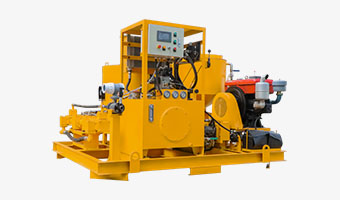
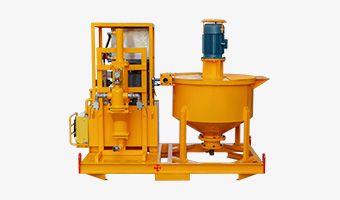
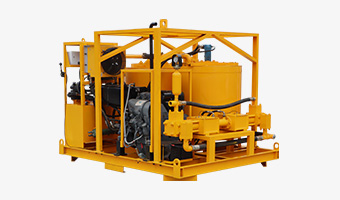
In TBM tunnel excavation, although the grouting system is an auxiliary device, it directly affects the reinforcement of the surrounding rock, void filling, seepage control, and construction continuity. Studies have shown that grouting behind the tunnel wall plays a crucial role in controlling ground deformation, stabilizing surrounding rock, and reducing segment uplift. The compatibility of the grout with the construction conditions is a key factor affecting the grouting effect.
However, many projects still use traditional equipment where the mixer, agitator, and grouting pump are separate. This reliance on manual transfer and independent operation not only occupies significant construction space but also easily leads to problems such as uneven grout mixing, grout supply interruptions, pressure fluctuations, and pipeline blockages.
To address these construction challenges, Henan Wode Heavy Industry Co., Ltd. has launched a
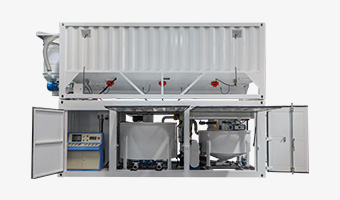
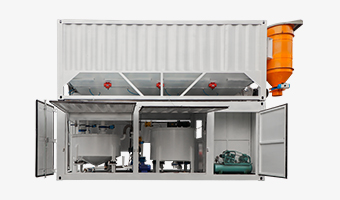
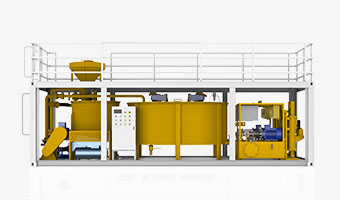
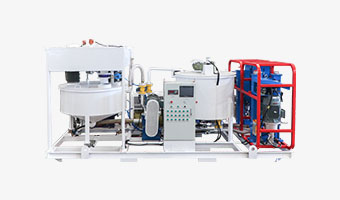
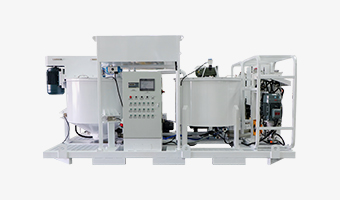
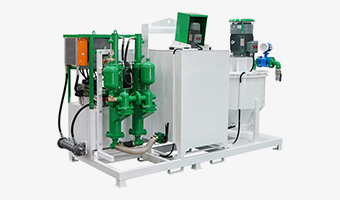
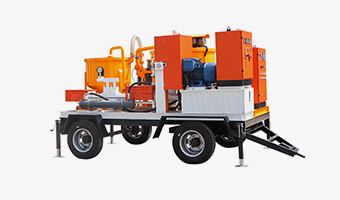
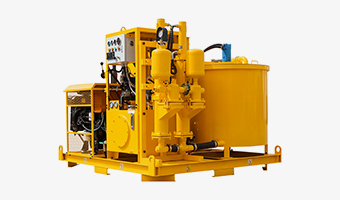
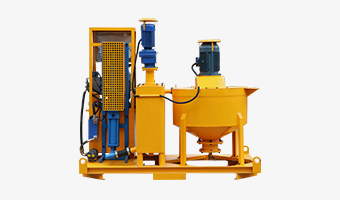
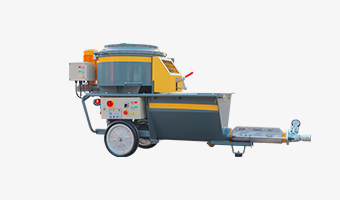
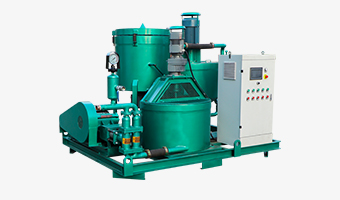
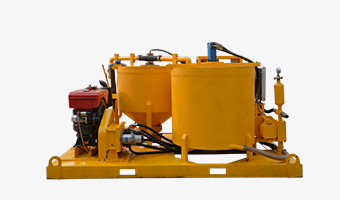
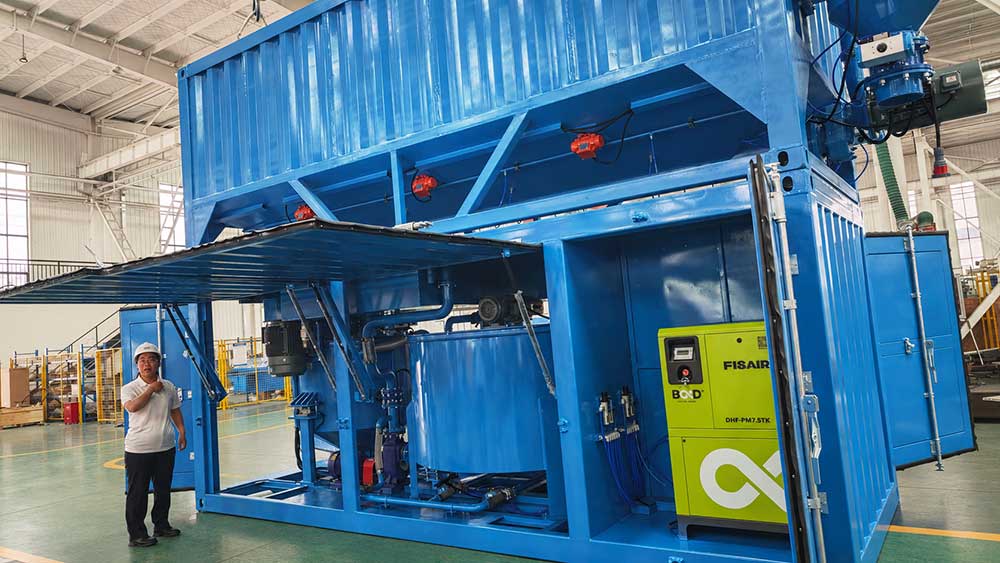
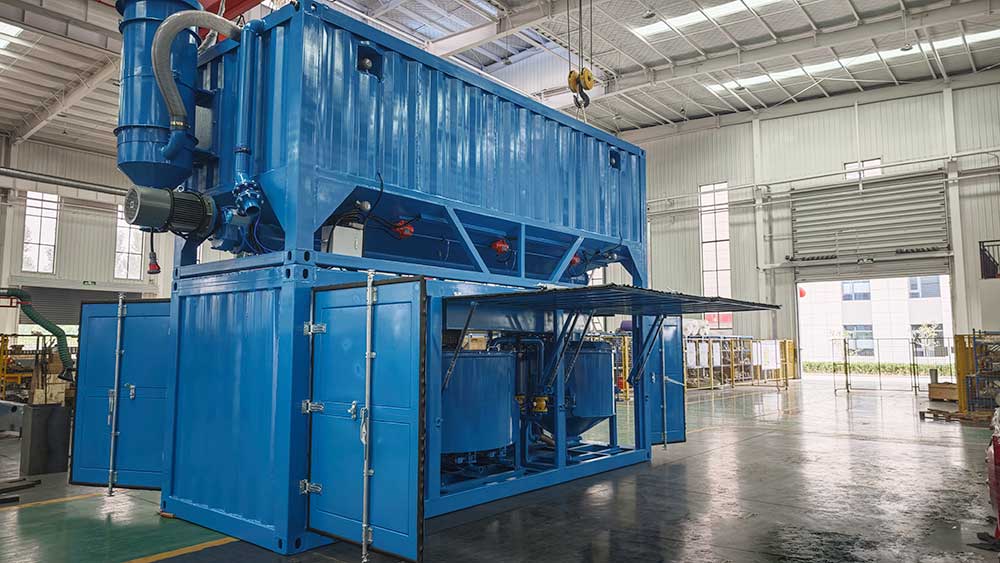
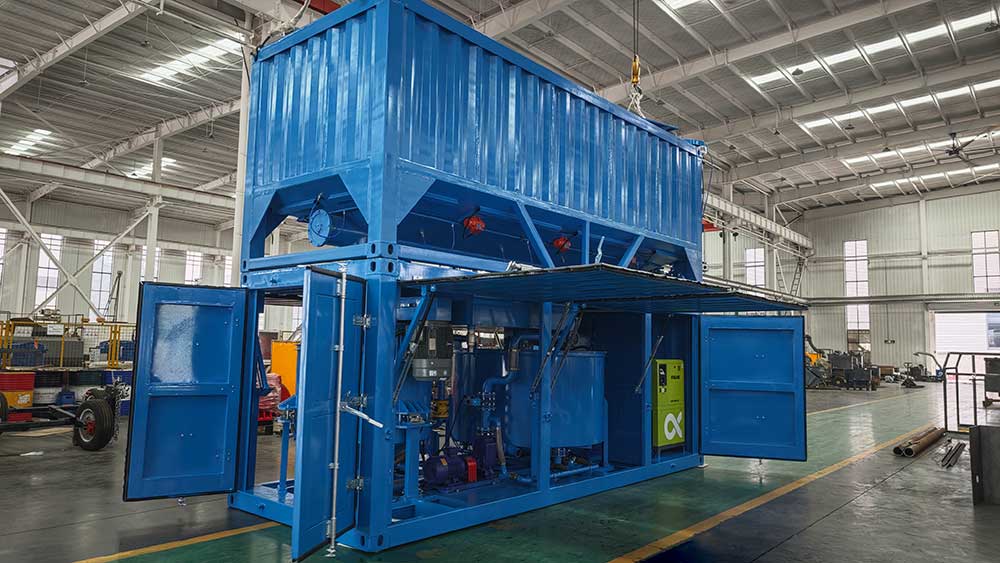
TBM Grouting Injection Plant that integrates grout preparation, storage, mixing, and pumping, providing a more continuous, stable, and easily managed grouting solution for tunnels and underground engineering.
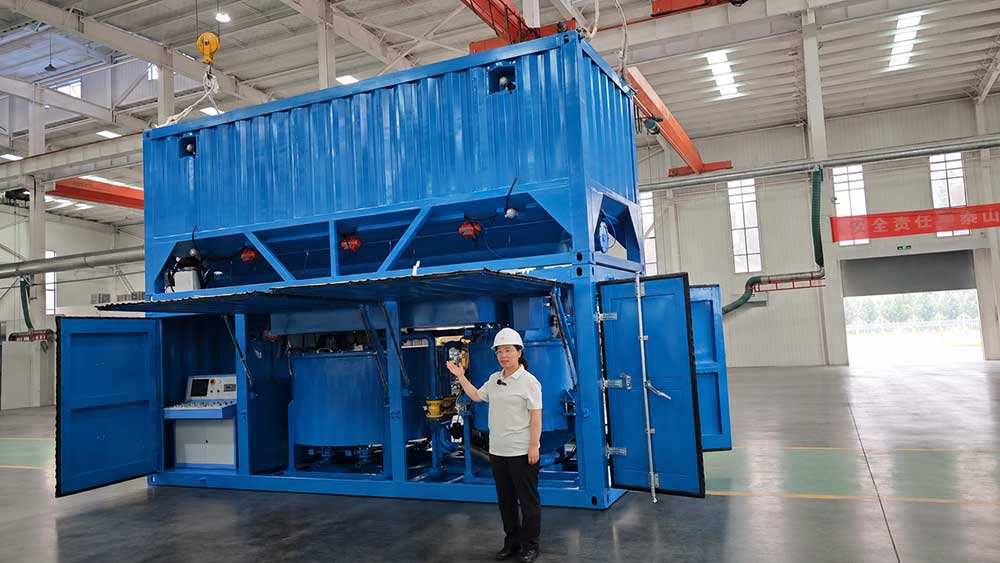
I. What are the differences between traditional split-type equipment and integrated grouting stations?
| Comparison Item |
Traditional Separate Grouting Equipment |
WODE TBM Grouting Injection Plant |
| System Configuration |
Mixer, agitator, and grout pump are installed separately |
Integrated mixing, agitating, storage and pumping system |
| Grout Quality |
Easily affected by manual batching and mixing time |
High-speed vortex or high-shear mixing ensures uniform grout quality |
| Continuous Grout Supply |
Multiple process connections may cause delays |
Coordinated mixing and injection processes support continuous operation |
| Pressure and Flow Control |
Limited adjustment options |
Adjustable pressure and flow for different grouting stages and ground conditions |
| Space Requirement |
Scattered equipment and complex piping require more space |
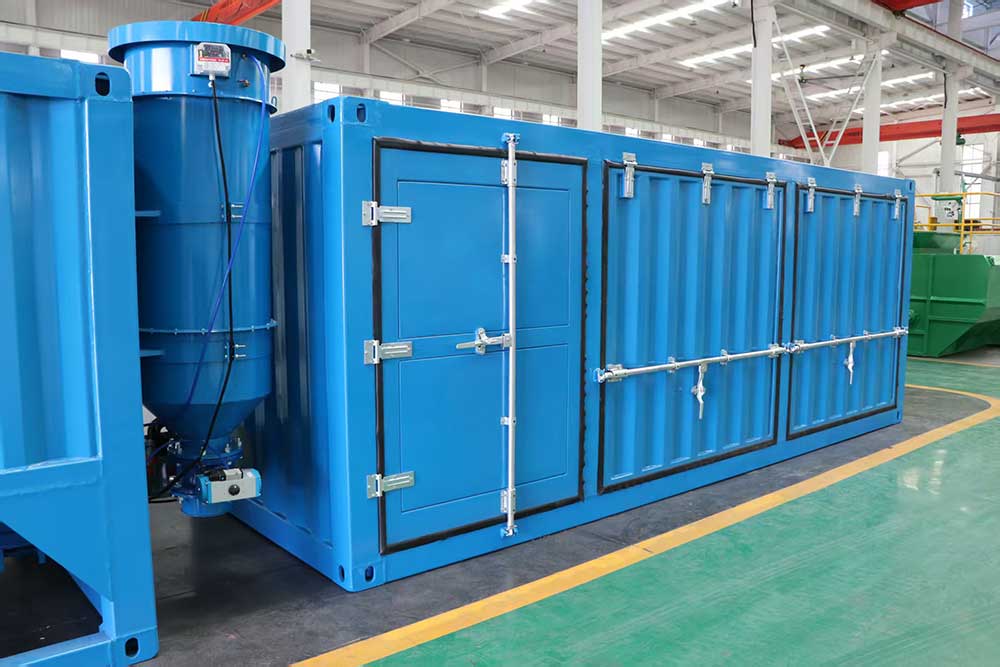
Compact or containerized design suitable for limited tunnel space |
| Operation and Control |
Multiple machines require separate operation |
Optional centralized control, PLC and HMI system |
| Installation and Relocation |
Multiple units and pipelines must be reconnected |
Integrated lifting and modular design simplify installation and relocation |
| Project Adaptability |
Mainly based on standard configurations |
Customizable according to grout type, pressure, flow rate, power supply and available space |
For TBM projects, the true value of the equipment is not just "the ability to pump out grout," but its ability to continuously provide grout with stable proportions, uniform mixing, and controllable pressure. The WODE TBM Grouting Injection Plant reduces transfer links between equipment through its integrated design, allowing operators to more centrally manage the grouting and injection processes.
II. What TBM grouting challenges can WODE equipment solve?
1. Solving problems of uneven grout mixing and sedimentation
Ordinary low-speed mixing equipment may result in cement clumping, insufficient additive dispersion, or grout stratification. WODE can be configured with a high-speed vortex or high-shear mixing system to rapidly mix cement, bentonite, water, and additives; the grout storage and mixing device continuously maintains grout flow, reducing the risk of sedimentation and segregation.
2. Solving the Problem of Unstable Grouting Pressure and Flow Rate
TBM construction may require adjustments to output based on surrounding rock fissures, groundwater pressure, grouting distance, and different construction stages. WODE can select plunger pumps, dual-plunger pumps, or triple-plunger pumps according to the project, and configure pressure and flow rate regulation schemes to meet different working conditions such as backfill grouting, filling grouting, consolidation grouting, and pre-grouting.
3. Solving the Problem of Limited Space Inside Tunnels
Traditional split equipment requires more connecting pipelines and operating space. The WODE TBM Grouting Injection Plant can adopt a compact, modular, or containerized design, and its layout can be optimized according to the TBM's supporting space, transportation dimensions, and hoisting conditions, reducing on-site installation work.
4. Solving the Problem of Easily Interrupted Equipment Operation During Long Term
TBM tunneling emphasizes the continuity of processes. Frequent shutdowns of grouting equipment can affect the overall construction rhythm. WODE comprehensively considers working hours, the lifespan of vulnerable parts, cleaning methods, maintenance space, and backup pump requirements during the scheme design phase, reducing the risk of unplanned downtime from the equipment configuration level.
5. Resolving Configuration Mismatches in Overseas Projects
Different countries have differences in voltage, frequency, plugs, control standards, shipping dimensions, and ambient temperature. Henan Wode Heavy Industry Co., Ltd. can provide customized configurations based on the project location, including electric or diesel power, different voltage and frequency options, PLC control, remote operation, and multilingual documentation.
III. More Than Just Supplying Equipment, Providing Solutions Matching the Project
Choosing a TBM Grouting Injection Plant should not be based solely on mixing tank capacity or grouting pump power. WODE engineers typically confirm the following conditions before selection:
1. Grout type and water-cement ratio;
2. Grout density, viscosity, and maximum particle size;
3. Required grouting flow rate and maximum working pressure;
4. Horizontal and vertical conveying distances;
5. Available installation space inside the TBM;
6. Local voltage, frequency, and power conditions;
7. Whether automatic batching, data monitoring, or two-component grouting is required.
Based on this information, WODE can provide solutions ranging from single-unit configurations to complete grouting systems, rather than simply recommending a standard piece of equipment. Its product line covers
high-pressure grouting pumps,
high-speed grouting mixers, and
integrated grouting stations, supporting TBM backfill grouting and underground tunnel construction applications.
IV. Where does the professional capability of Henan Wode Heavy Industry Co., Ltd. lie?
Henan Wode Heavy Industry Co., Ltd. has its own production base and a professional engineering team, capable of completing equipment design, machining, assembly, control system integration, operational testing, and factory inspection. The official website showcases products including compact grouting plants, large-capacity automatic grouting plants, and grouting pump systems with varying pressure and flow rates, configurable for underground engineering projects.
Starting with the client providing construction parameters, WODE can assist in the following:
1. Grouting equipment selection and capacity calculation;
2. Matching of mixing, grout storage, and pumping systems;
3. Equipment size and site layout optimization;
4. Customization of electrical and automatic control systems;
5. Factory operation testing and quality inspection;
6. Operation manuals, video guidance, and remote technical support;
7. Configuration of vulnerable parts and subsequent maintenance plans.
V. How to Choose the Right TBM Grouting Injection Plant?
Traditional split-type equipment is more suitable for projects with smaller construction volumes, shorter operation times, and ample site space. For TBM tunnel projects requiring continuous grout supply, stable pressure, centralized control, and compact layout, integrated TBM grouting injection plants are generally more adaptable.
Henan Wode Heavy Industry Co., Ltd. not only provides grouting equipment but also focuses on the specific problems that clients need to solve on-site. Whether the project faces issues such as grout sedimentation, insufficient grout supply efficiency, fluctuating grouting pressure, narrow tunnel space, or different local power supply configurations, WODE can design a more suitable equipment solution based on actual parameters.
For accurate selection and quotation, please provide the grout formula, target flow rate, maximum pressure, delivery distance, operating time, power supply conditions, and equipment installation space. WODE engineers will then provide a one-on-one TBM grouting solution.