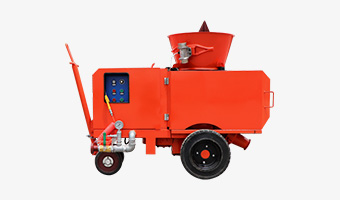
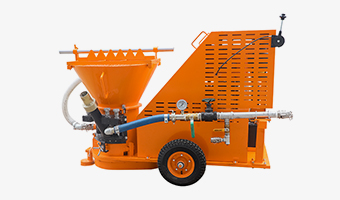
How to Choose an Air-Driven Refractory Gunning Machine?
Choosing an air-driven refractory gunning machine starts with material compatibility and site conditions. The machine must suit the refractory mix, while the compressed-air supply, water supply, delivery hose, and nozzle must work together as a complete system.
Rated output is only one selection factor. Stable feeding, water control at the nozzle, wear-part maintenance, and spare-parts availability also affect installation planning and long-term operating costs.
For furnace maintenance teams, refractory contractors, and international equipment buyers, the most useful question is: Will this configuration work reliably with our material and installation conditions?
How Does an Air-Driven Refractory Gunning Machine Work?
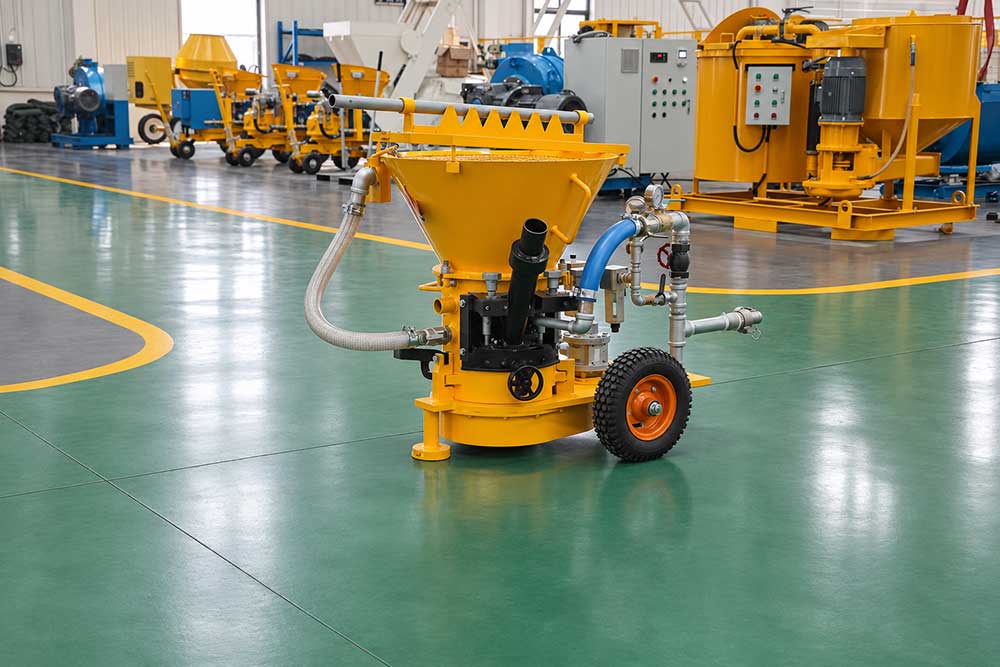
An
air-driven refractory gunning machine uses a pneumatic motor to drive its material-feeding mechanism. Compressed air then carries the material through a delivery hose to the nozzle.
In the dry-process arrangement described in the supplied brochure, material enters the rotor pockets through the hopper. The rotor moves the material beneath the conveying-air inlet and outlet. Compressed air clears the pockets and transports the material through the hose. Water is introduced at the nozzle before the mixture reaches the application surface.
Two air requirements therefore need attention: air for the feeding drive and air for material conveying. Compressor selection must account for the complete system rather than the air motor alone.
Because water is added at the nozzle, application quality also depends on the refractory formulation, water supply, nozzle condition, and operator adjustments.
Check Material Compatibility Before Comparing Machine Specifications
Refractory gunning mixes differ in particle-size distribution, bulk density, binder system, and storage condition. These differences can affect feeding and pneumatic conveying.
Before selecting equipment, check the material supplier’s installation requirements against:
- The machine's permitted aggregate size and grading;
- Acceptable material moisture and any pre-dampening requirements;
- Rotor, hose, and nozzle compatibility;
- The specified water-addition method;
- The effects of moisture pickup, lumps, or changes in flowability.
A material that passes through the hopper is not automatically suitable for the entire conveying and spraying system.
For an unverified formulation, a trial using the actual material provides more useful evidence than a brochure comparison alone.
The operating environment also needs definition. Shutdown maintenance, cold installation, and special repair conditions may require different equipment arrangements. A general description of refractory gunning does not establish that a particular machine is suitable for hot repairs.
Verify Airflow as Well as Pressure
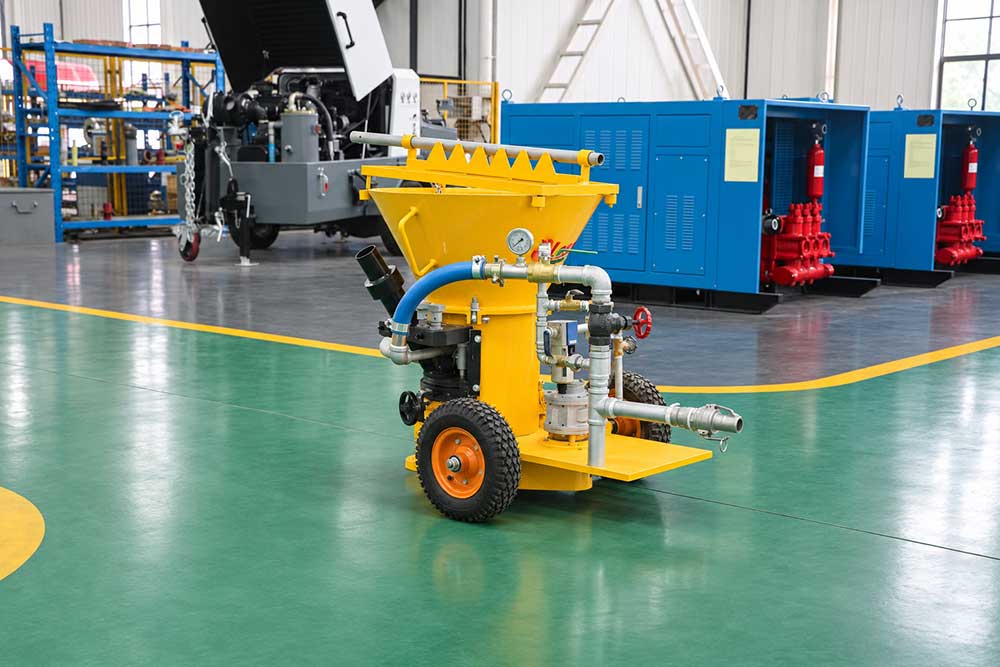
A pneumatic machine needs a suitable combination of working pressure and available airflow.
Compressor discharge pressure alone does not confirm that the machine will receive sufficient air during continuous operation. Supply-line dimensions, connections, and other equipment using the same air source can affect the air available at the machine.
Before purchasing, establish:
- The combined air requirements for the drive and material transport;
- Whether the quoted pressure and airflow refer to the same operating conditions;
- Whether the compressor can maintain the required supply during continuous work;
- The filtration, regulation, and lubrication requirements in the equipment instructions.
For buyers with an existing compressor, checking compatibility early can prevent additional adjustments after delivery.
An air-driven configuration also does not, by itself, establish explosion protection or hazardous-area certification. Those requirements must be verified separately where applicable.
Assess Output and Conveying Distance Under Real Conditions
Rated output or maximum theoretical performance can support an initial comparison. It should not be treated as guaranteed production on a particular project.
The actual operating conditions need to be considered together.
| Site factor |
What to verify |
| Material characteristics |
Particle grading, density, and flowability |
| Delivery-hose diameter |
Compatibility with the material, outlet, and nozzle |
| Horizontal distance and vertical lift |
Suitability within supplier-confirmed operating conditions |
| Hose bends and connections |
Compliance with the recommended installation arrangement |
| Available compressed air |
Adequacy during continuous operation |
| Loading and staffing |
Ability to maintain a suitable material supply |
Project productivity also differs from machine throughput. Material transported through the hose is not the same as accepted refractory lining installed.
Rebound, loading, adjustments, cleaning, and maintenance all affect the amount of completed work during a shift. Equipment comparisons become more useful when they consider the full installation process under similar conditions.
Control Dust, Rebound, and Lining Quality Together
Reducing dust and rebound while maintaining lining quality is a common installation objective. However, none of these outcomes can be guaranteed by a machine model alone.
Material grading, feeding consistency, nozzle water, spraying angle, nozzle distance, and surface condition all need to follow the material and project requirements.
Insufficient water may affect wetting and adhesion. Excess water may affect application stability and lining performance. Adjustments should therefore follow the material's technical instructions and trial results rather than a single setting applied to every mix.
Where a pre-dampening nozzle is proposed, its suitability for the refractory formulation and equipment arrangement should be checked. Claims such as “low dust” or “low rebound” describe performance that needs validation under defined conditions.
Site ventilation, dust controls, and personal protection remain necessary in accordance with project requirements.
What Does the WZ-6AR/RD Air-Driven Refractory Gunning Machine Design Offer Buyers?
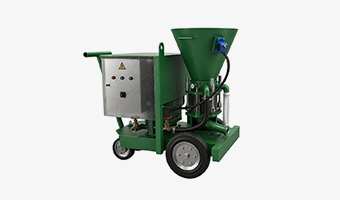
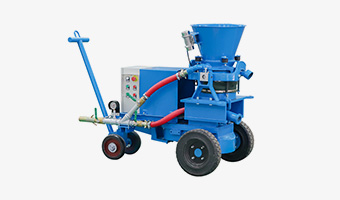
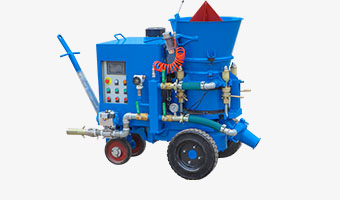
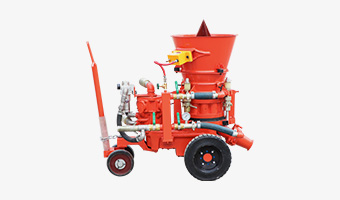
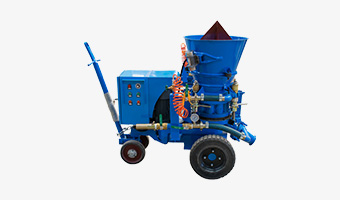
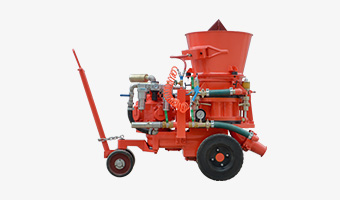
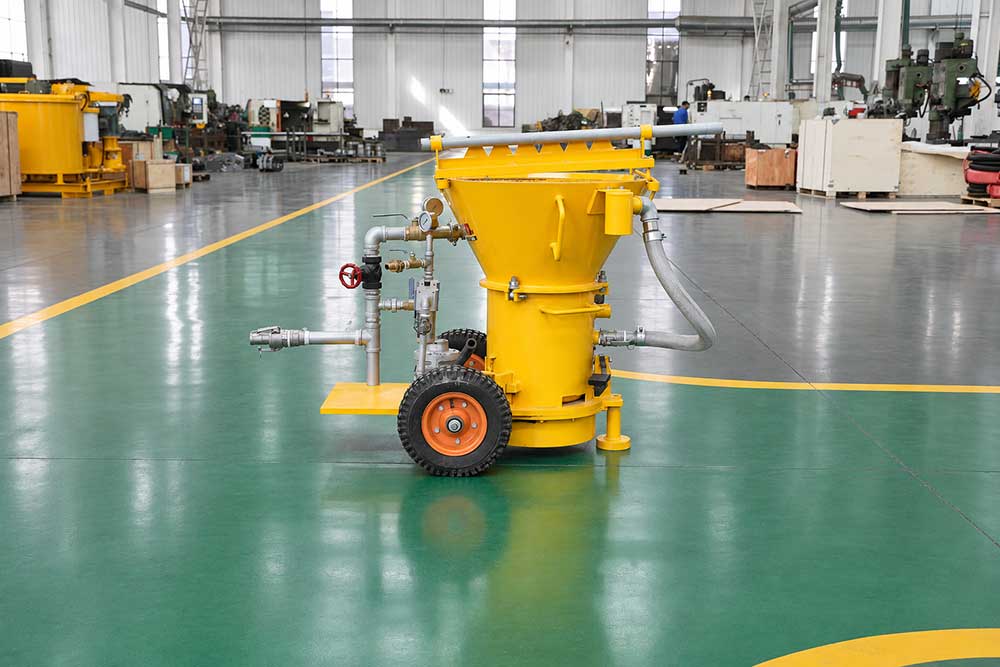
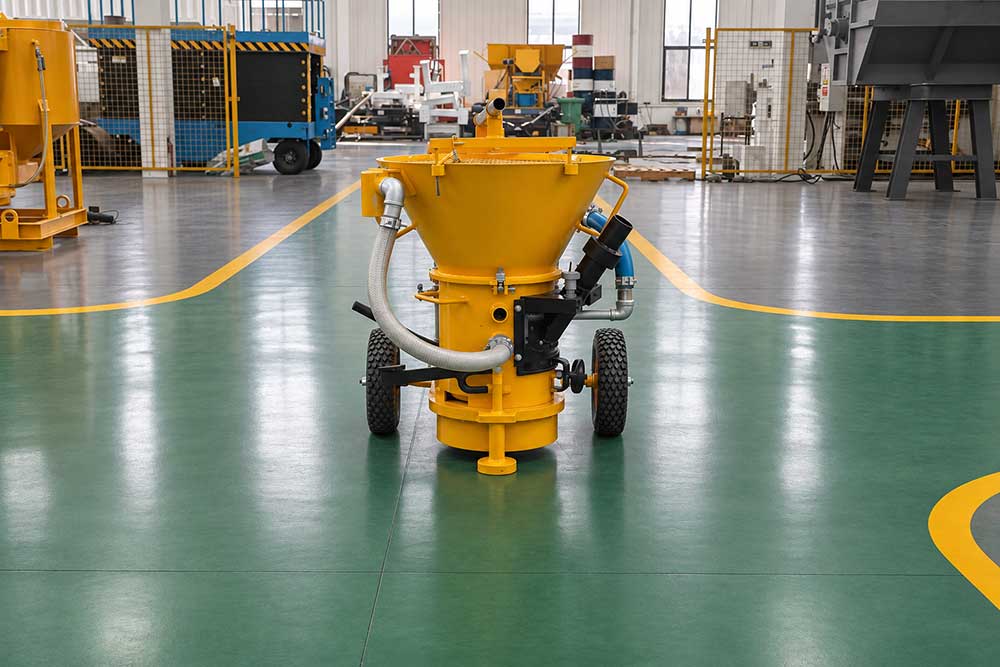
The supplied brochure describes the WZ-6AR/RD with an air-driven feeding mechanism and lists a direct-drive 5 HP air motor, continuous-feed hopper, bag breaker, double-blade agitator, pressure gauges, and quickly replaceable rubber sealing plates.
It also states that the machine can use a conveying hose with a 38 mm internal diameter.
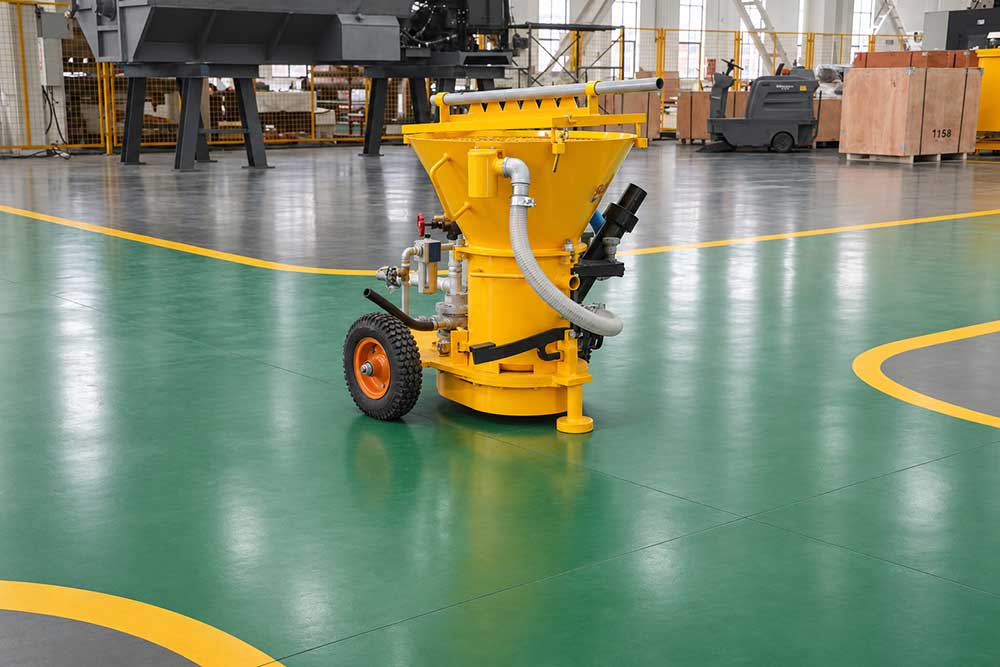
These features are most useful when connected to specific operating questions.
| Brochure feature |
Practical consideration |
| Air-motor drive |
Verify the compressed-air infrastructure required for the complete system |
| Continuous-feed hopper and bag breaker |
Assess bagged-material handling and staffing for continued loading |
| Double-blade agitator |
Consider material handling in the hopper; verify feeding performance with the actual mix |
| Pressure gauges |
Observe pressure at the connected points; check airflow separately |
| Quickly replaceable rubber sealing plates |
Plan inspection and wear-part replacement without assuming a fixed service life |
| 38 mm internal-diameter hose |
Check the complete delivery arrangement; hose diameter alone does not establish material or distance limits |
These details provide a starting point for evaluation. Buyers should still confirm current specifications, the standard supply package, and the required nozzle, hose, compressor, and accessory arrangements.
Consider Maintenance and Total Operating Cost
For international buyers, equipment cost extends beyond the machine’s purchase price.
Compressor provision, energy use, wear parts, material losses, maintenance labour, and downtime can all affect operating costs. Spare-part identification and replenishment are particularly relevant when equipment operates far from the supplier.
Before purchasing, review the English operating documentation, wear-parts list, inspection instructions, replacement guidance, and available remote technical support.
An initial spare-parts package should reflect the supplier's recommendations, expected usage, and replenishment lead time. Replacement intervals should not be invented or assumed to apply equally to every material.
Comparisons between pneumatic and other drive arrangements should also consider the complete project setup. Supporting equipment, operating convenience, maintenance resources, and total cost provide a more useful basis than the machine price alone.
Frequently Asked Questions
Does an air-driven refractory gunning machine need electricity?
The pneumatic motor runs on compressed air. However, the compressor or auxiliary equipment may require electricity. Check the requirements of the complete installation system.
Can a 38 mm hose convey every refractory gunning mix?
No. Particle grading, flowability, conveying distance, air supply, and equipment compatibility must also be checked.
Can the same machine handle refractory materials and ordinary concrete?
A general application list is not enough to establish compatibility. Material characteristics and installation requirements may differ. The equipment and material suppliers should confirm the suitability of the specific configuration.
What is the most useful way to compare machines?
Use the same material, similar hose arrangements, and consistent application requirements where possible. Evaluate air conditions, feeding stability, application results, and maintenance needs together.
Choose Around the Installation System
A suitable air-driven refractory gunning machine must match the material and the site. Air supply, conveying arrangements, nozzle performance, and maintenance support should be assessed together.
A configuration that fits the installation process provides more practical value than an isolated maximum specification.
For projects considering the WZ-6AR/RD Air-Driven
Refractory Gunning Machine, discuss the current configuration and material requirements with the WODE technical team. Where operating conditions have not been validated, use a representative material trial to confirm suitability.