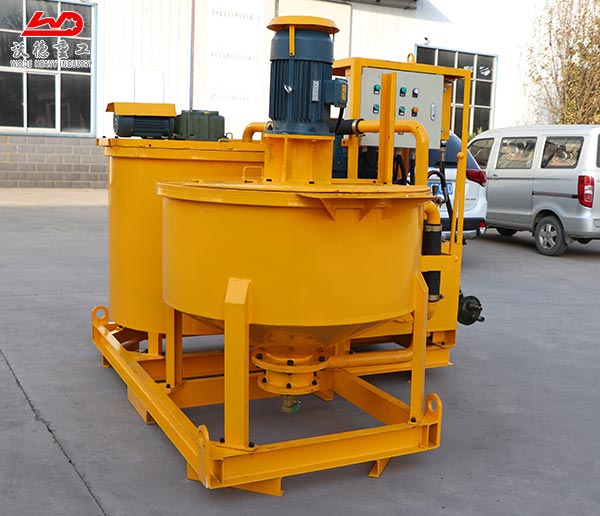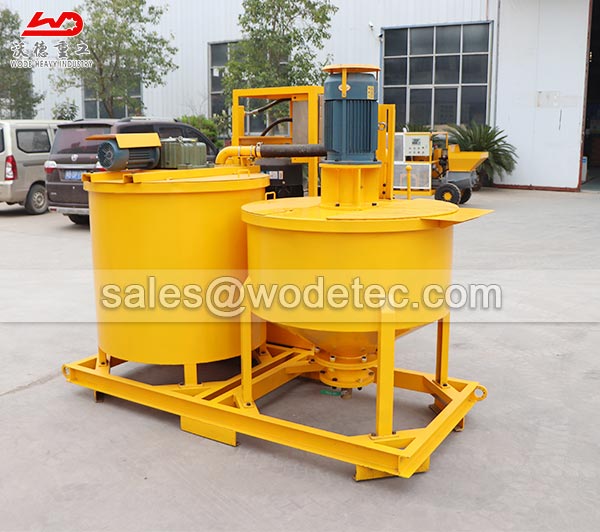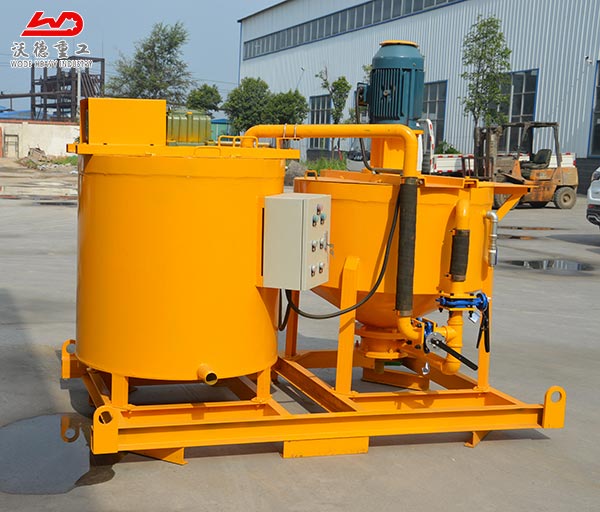
400L high speed cement grout mixer
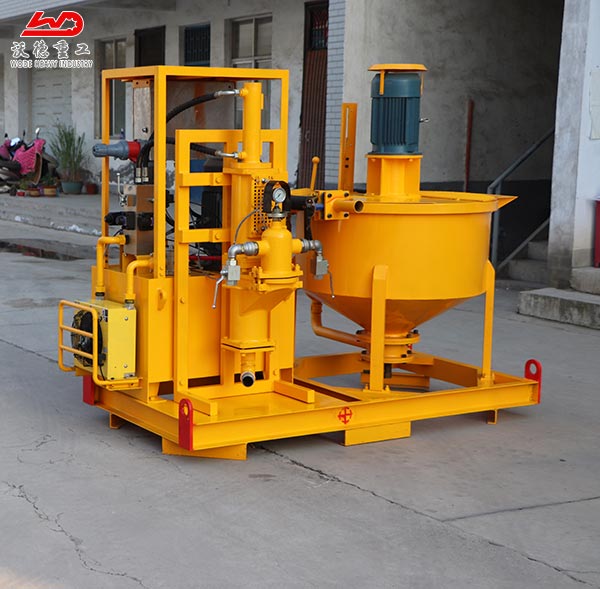
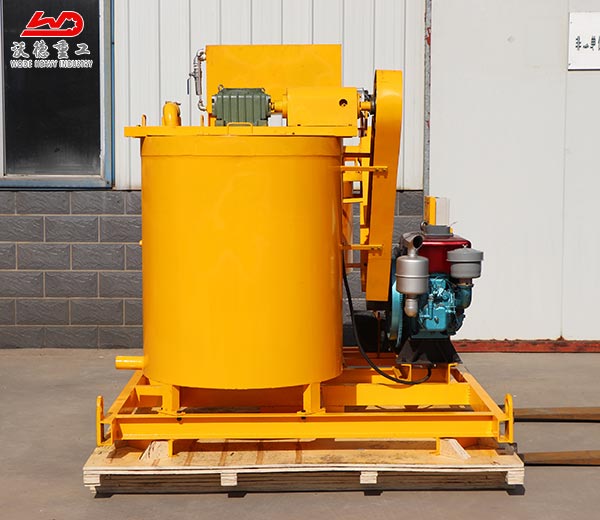
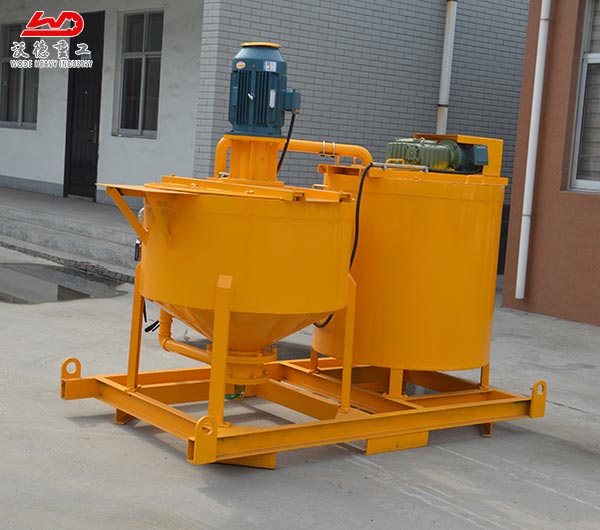
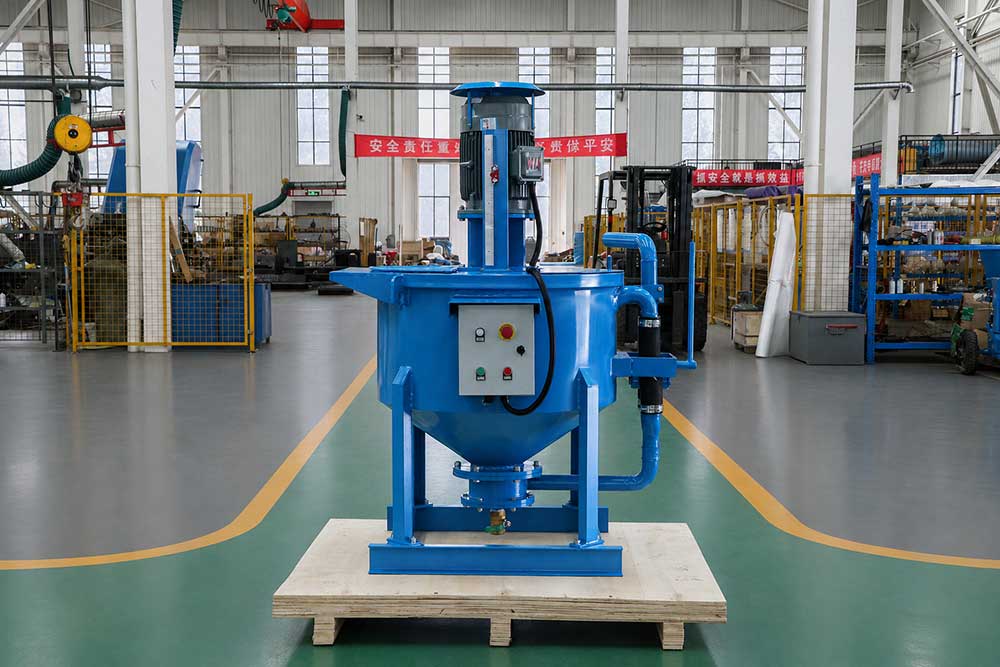
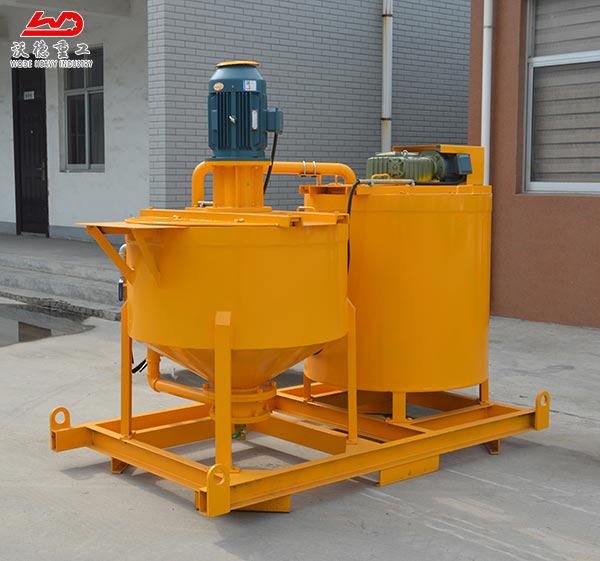
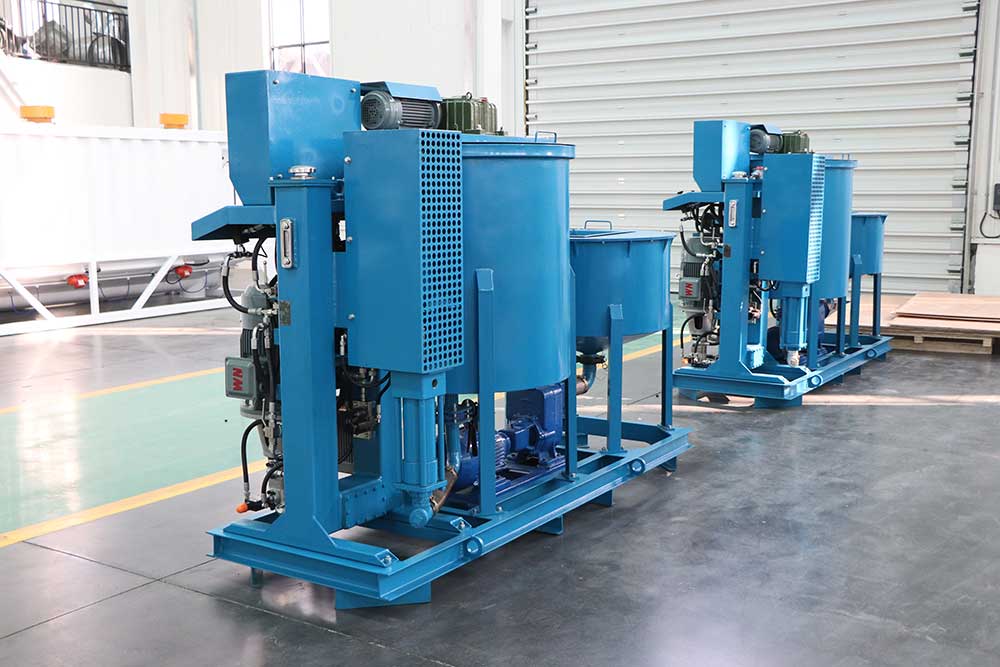
When selecting grouting equipment, many customers focus primarily on the pump’s pressure and flow rate, yet tend to overlook the slurry preparation stage. In fact, whether the slurry can be prepared quickly and uniformly directly affects whether the grouting pump needs to be put on hold, and also influences the pumpability and stability of each batch of slurry. The HWM400D high speed cement grout mixer features a 400-litre mixing tank and a high-speed impeller operating at 1,500 rpm, making it suitable for cement, bentonite and slurries confirmed to contain fine sand. It can be used for foundation treatment and underground engineering projects.
When selecting grouting equipment, many customers focus primarily on the pump’s pressure and flow rate, yet tend to overlook the slurry preparation stage. In fact, whether the slurry can be prepared quickly and uniformly directly affects whether the grouting pump needs to be put on hold, and also influences the pumpability and stability of each batch of slurry. The HWM400D high speed cement grout mixer features a 400-litre mixing tank and a high-speed impeller operating at 1,500 rpm, making it suitable for cement, bentonite and slurries confirmed to contain fine sand. It can be used for foundation treatment and underground engineering projects.
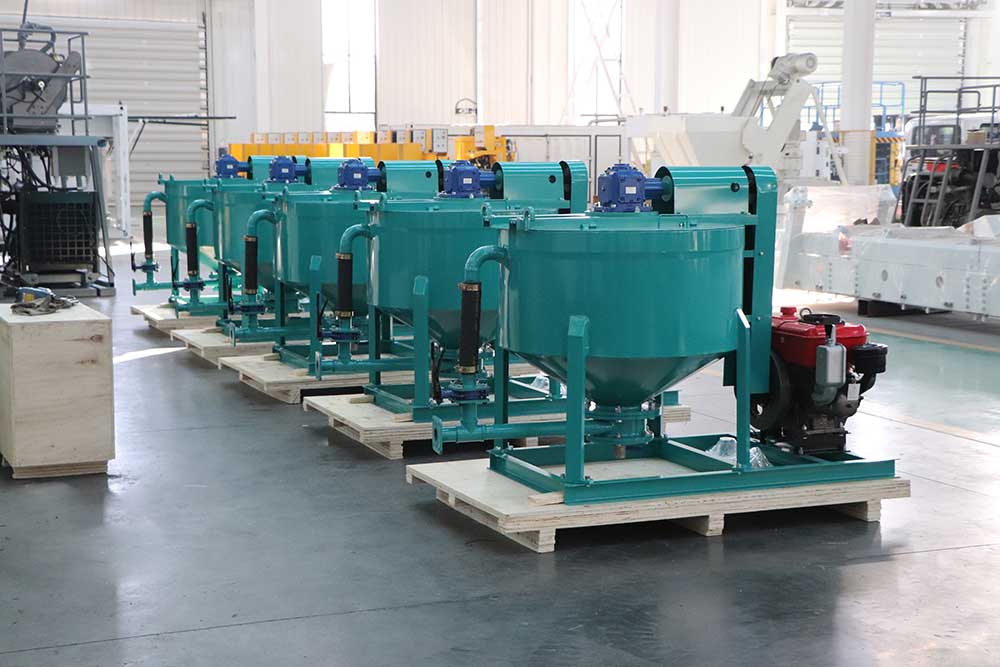
Why does high-speed mixing affect grouting efficiency?
Low-speed impellers rely primarily on agitation and circulation to achieve mixing; when cement powder is added rapidly, this can easily lead to localised clumping or variations in concentration between the upper and lower parts of the tank. High-speed impellers enhance circulation within the tank, enabling water to come into contact with cement particles more quickly, which helps to form a more uniform, pure cement slurry that is less prone to settling or segregation within a shorter time.
The HWM400D high speed cement grout mixer is suitable for water-to-cement ratios of 0.45 and above. The figure of 0.45 represents the equipment’s operating range; however, this does not mean that the same ratio should be adopted for all projects. The actual water-to-cement ratio must still be determined based on the design strength, slump, bleeding rate, the ground into which the grout is injected, and the results of on-site mix testing.
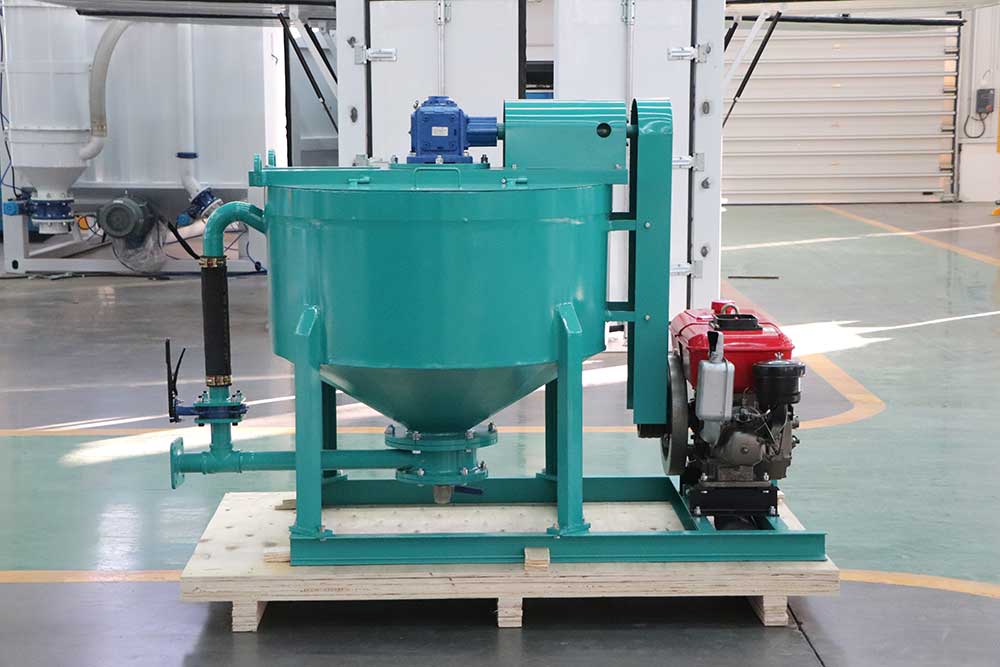
With a 400-litre capacity, this high speed cement grout mixer strikes a balance between batch output and on-site deployment flexibility. For intermittent construction work such as foundation reinforcement, void filling, and tunnel and underground reinforcement, it can provide construction teams with consistent, repeatable batches without the need for a large, fully automated grouting station.
Can be used independently or integrated into a complete grouting system
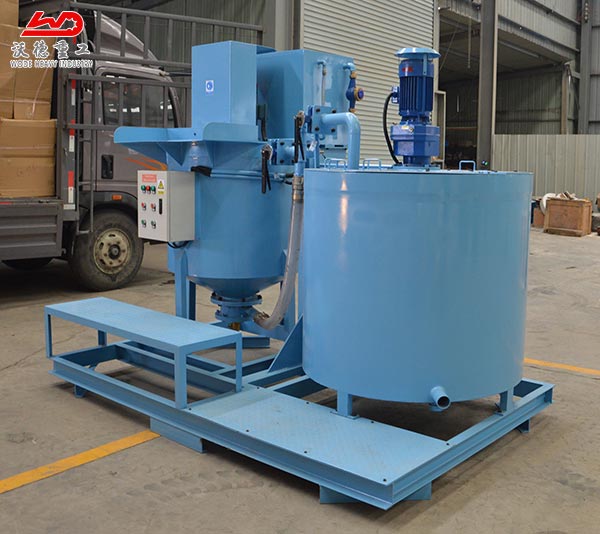
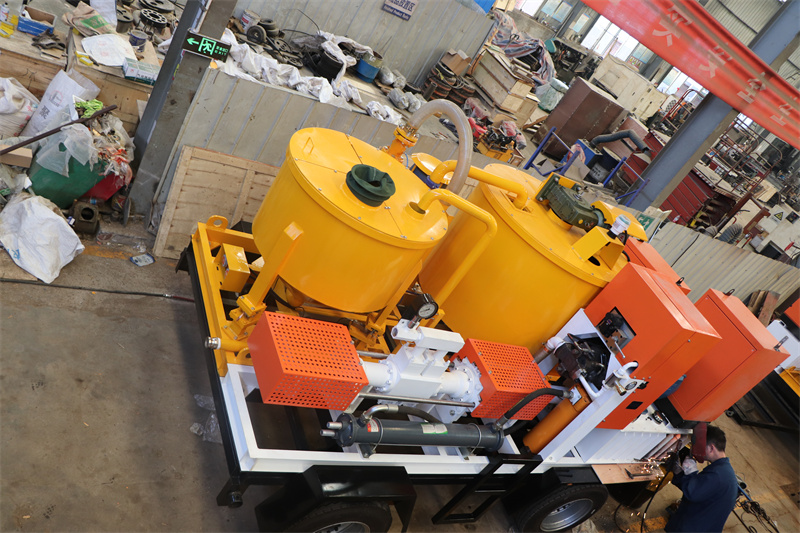
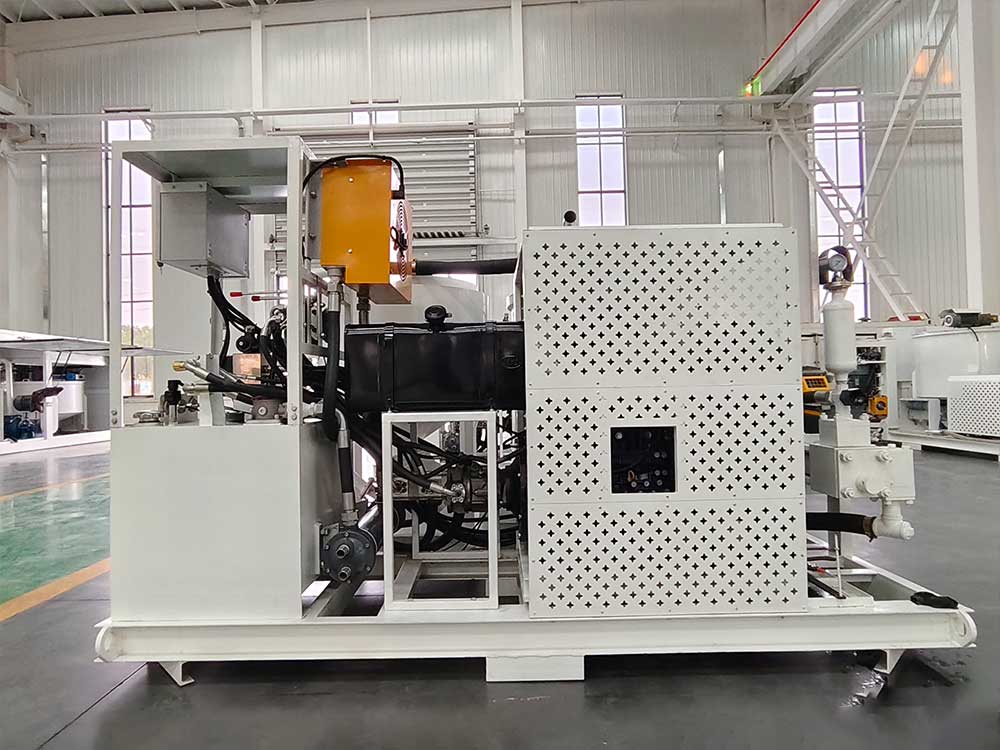
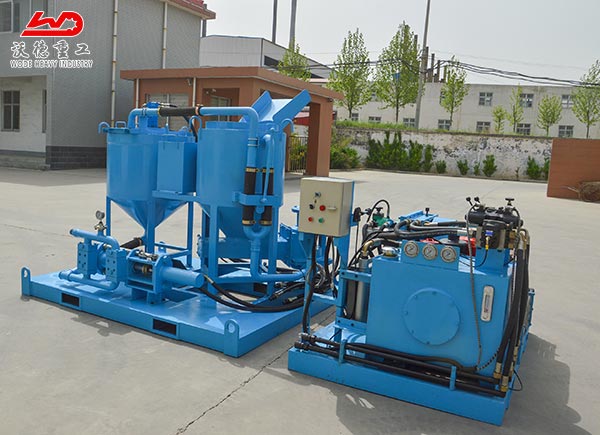
The unit features a built-in impeller pump for slurry circulation and discharge. In conditions suitable for low-pressure delivery, it can function as a standalone mixing and discharge unit; where precise control of injection pressure and flow rate is required, a separate grouting pump should be connected. The unit can also be combined with a slurry storage and mixing tank, allowing high-speed mixing, low-speed storage and pressure injection to perform their respective tasks.
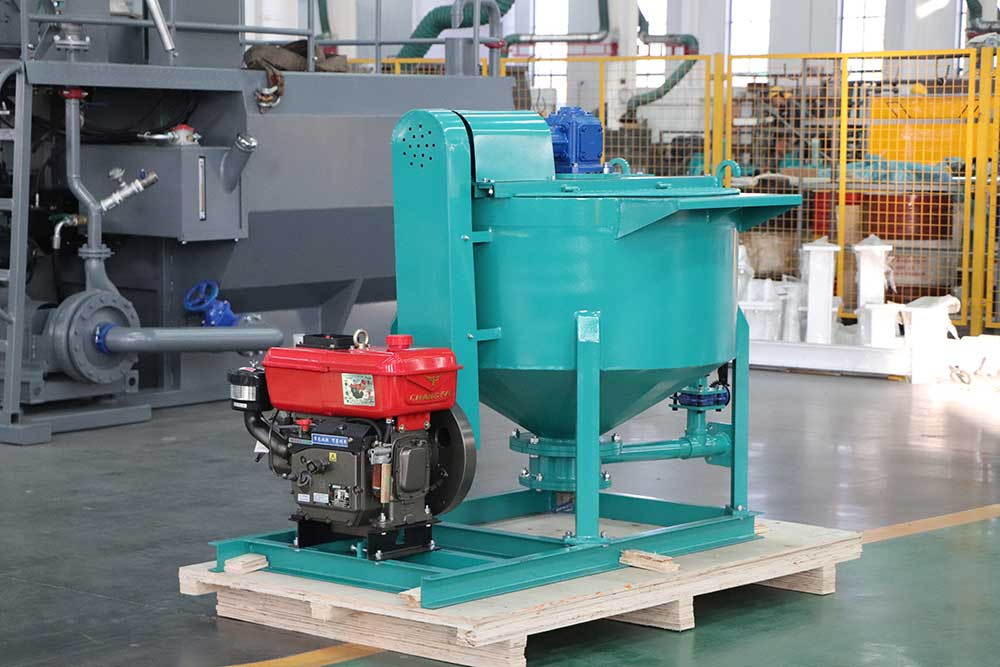
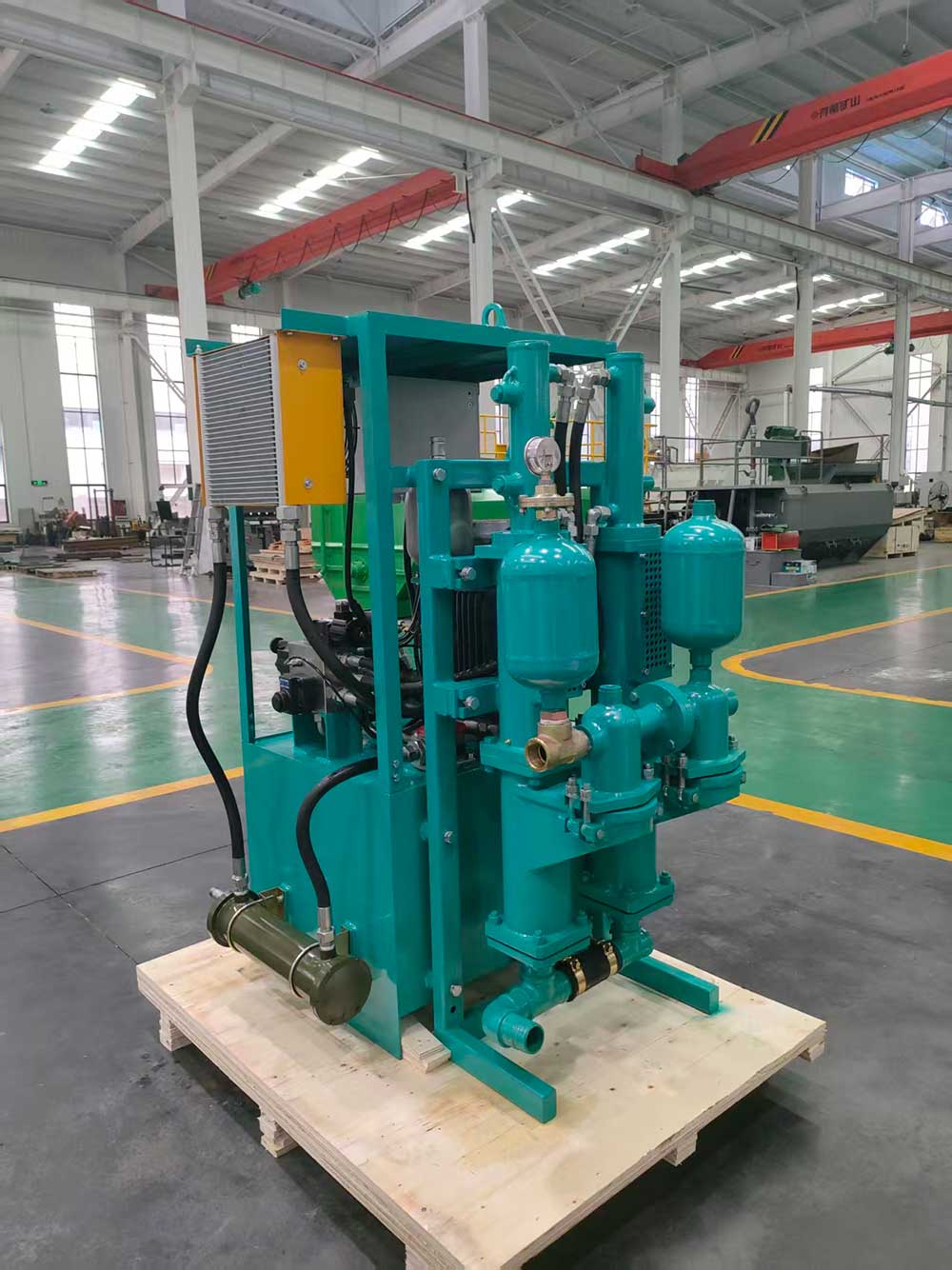
This modular configuration facilitates gradual expansion in line with project requirements. For small-scale construction projects, the mixer can be used initially; for continuous operations or larger projects, a slurry storage tank and grouting pump can be added later, thereby avoiding the need to purchase a system that exceeds requirements from the outset.
If the power supply at the project site is unstable and there is a need to rapidly prepare cement or cement-bentonite slurry, the HWM400D high speed cement grout mixer is a practical choice.